Personalized Medical Care & Dedicated International Patient Concierge

Medical Guide
Can LASIK Fix Astigmatism? Success Rates & What to Expect
For many years, a common myth suggested that laser surgery was only for people who were nearsighted or farsighted. If you had astigmatism you were often told you were stuck with...
Schedule a Consultation
Introduction
For many years, a common myth suggested that laser surgery was only for people who were nearsighted or farsighted. If you had astigmatism you were often told you were stuck with toric contact lenses or thick glasses forever. However, the reality is much more optimistic. Today, LASIK fix astigmatism procedures are among the most common and successful eye surgeries performed globally.

The Football vs. Basketball Eye
To understand how LASIK works, it helps to visualize the shape of your eye. A normal eye is shaped like a perfectly round basketball. Light enters and focuses on a single point on the retina. If you have astigmatism, your eye is shaped more like an American football or a rugby ball. Because the cornea is curved unevenly, light stretches and blurs, making things look fuzzy at all distances.
Can LASIK fix astigmatism? The answer is a definitive yes. Modern laser technology is now so precise that it can smooth out those uneven curves, turning that football shape back into a basketball shape. While this technology is available worldwide global medical hubs like South Korea have revolutionized the process making high-end treatment more accessible and affordable than ever before.
How LASIK Corrects Astigmatism
The Science of Reshaping
LASIK stands for Laser-Assisted In Situ Keratomileusis. During the procedure, a surgeon uses a specialized tool called an excimer laser. This laser does not use heat instead it uses a cool ultraviolet light beam to remove microscopic amounts of tissue from the cornea. By doing this the surgeon can smooth out the asymmetrical curves that cause astigmatism.
Ablation Patterns
Because astigmatism means your eye is flatter in some areas and steeper in others, the laser doesn't just treat the whole eye equally. It uses specific ablation patterns. The laser treats different meridians (directions) of the eye with different intensities to create a perfectly spherical surface.
Modern Technology: Contoura Vision
The latest advancement in this field is Topography-Guided LASIK often called Contoura Vision. This tech maps 22,000 unique elevation points on your cornea. It’s like creating a digital fingerprint of your eye allowing the laser to fix even the tiniest irregularities that standard glasses could never correct.
Success Rates: What the Data Says
When patients ask if a LASIK fix astigmatism plan is effective the statistics provide a very reassuring answer.
| Outcome Category | Success Rate / Statistic |
|---|---|
| Visual Acuity (20/20) | Over 90% of patients achieve 20/20 vision |
| Legal Driving Vision (20/40) | Over 99% of patients achieve 20/40 or better |
| Patient Satisfaction | Approximately 96% |
Long-term Stability
Once the cornea is reshaped, the change is permanent. While your eyes can still change due to natural aging like needing reading glasses in your 40s or 50s the correction for astigmatism does not wear off.
High vs. Low Astigmatism
Success rates are highest for mild to moderate astigmatism. However, even patients with high diopters see massive improvements often reducing their dependence on glasses entirely.
Candidacy: Are You a Fit?
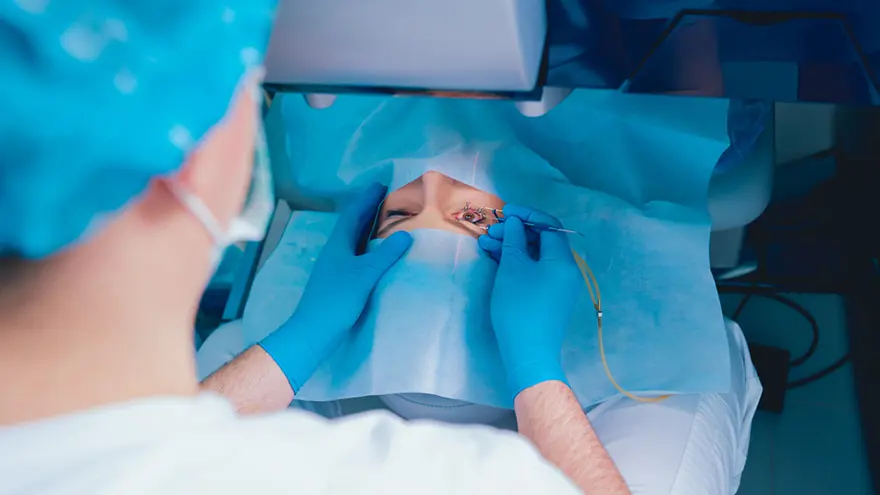
Not everyone is a perfect candidate for LASIK. A thorough screening is required to ensure safety.
The Diopter Limit: Generally, LASIK can fix astigmatism up to about 6.00 diopters. If your prescription is higher than this, other options might be safer.
Corneal Health (Pachymetry): The surgeon must measure your corneal thickness. Because the laser removes tissue, you need enough cushion left behind to keep the eye strong.
Regular vs. Irregular Astigmatism:
Regular: The eye is shaped like a football. LASIK is perfect for this.
Irregular: Often caused by a condition called Keratoconus or eye scarring. This usually requires specialized treatments rather than standard LASIK.
The Procedure & Recovery Timeline
The 15-Minute Miracle
The surgery itself is incredibly fast. Here is what to expect:
Numbing: The surgeon applies anesthetic drops (no needles!).
Flap Creation: A thin flap is created on the surface of the cornea.
Laser Reshaping: You look at a blinking light while the laser reshapes your eye usually takes less than 60 seconds.
Replacement: The flap is laid back down, where it heals naturally without stitches.
The Recovery Timeline
The First 24 Hours: You may feel a gritty sensation like an eyelash is in your eye. It is vital not to rub your eyes as this could dislodge the flap.
One Week Post-Op: Most patients return to work and driving within 24–48 hours. By the end of the first week halos and glare around lights begin to fade significantly.
Potential Risks and Side Effects
While the success rate for a LASIK fix astigmatism procedure is high, you should be aware of common side effects:
Temporary Dry Eye: The most common side effect. Your doctor will provide lubricating drops to use for a few months.
Night Vision Issues: Some patients see starbursts or glare around headlights at night during the first few weeks of healing.
Under-correction: In rare cases, the eye doesn't respond exactly as expected. A minor touch-up or enhancement surgery can usually fix this.
Global Cost Analysis: Why South Korea is the Premier Choice
When considering surgery, cost and quality are the two biggest factors. While many patients look for local options, South Korea has emerged as the world’s leading destination for LASIK.
South Korea offers a Medical Hub advantage. Because Korean surgeons perform a massive volume of these procedures, they are often more experienced than Western doctors. Additionally, South Korean clinics invest in the absolute latest equipment, such as the SCHWIND AMARIS 1050RS, much faster than clinics in other regions.
| Country | Estimated Cost | Technology Standard | Why Choose? |
|---|---|---|---|
| USA | $2,500 - $4,000 | High | Local convenience |
| UK | $2,000 - $3,500 | High | Rigorous regulation |
| South Korea | $1,000 - $1,900 | Exceptional (Latest) | Cheapest & world-leading expertise |
Alternatives to LASIK for Astigmatism

If you aren't a candidate for LASIK, don't worry. There are other ways to fix your vision:
SMILE: A flapless procedure that is great for people with active lifestyles or chronic dry eyes.
PRK: The laser treats the surface of the eye directly. This is the best option for people with very thin corneas.
ICL (Implantable Collamer Lens): Instead of reshaping the eye, a tiny lens is placed inside the eye. This is ideal for extremely high levels of astigmatism.
Frequently Asked Questions
1. Can LASIK Fix High Levels of Astigmatism?
Yes, modern LASIK technology can typically correct astigmatism of up to about 6.00 diopters, as long as the cornea is thick and healthy enough. For higher levels of astigmatism or thinner corneas, surgeons may recommend alternative options such as Implantable Collamer Lenses (ICL).
2. Does the Astigmatism Come Back After LASIK?
The corneal reshaping performed during LASIK is permanent, so astigmatism itself does not return. However, natural age-related vision changes, such as presbyopia, may still occur over time, affecting near vision but not reversing the astigmatism correction.
3. Is the Procedure Painful?
The procedure is not painful. Anesthetic eye drops fully numb the eyes, and while you may feel mild pressure for about 30 seconds during treatment, there is no sharp or lasting pain.
4. How Long Until I Can Drive After Surgery?
Most patients are able to drive within 24 to 48 hours after surgery, once they have completed their first post-operative check-up and received clearance from their surgeon.
5. Why Is South Korea Recommended for LASIK?
South Korea is internationally recognized for its advanced laser eye surgery technology and highly experienced surgeons. The country also offers significantly lower costs compared to the other countries, making it a leading destination for high-quality, affordable LASIK.
6. Will I Still Need Glasses at All?
Many patients achieve 20/20 vision and no longer need glasses for everyday activities. However, individuals over the age of 40 may still require reading glasses in the future due to the natural aging of the eye’s lens.
Conclusion
Waking up and being able to see the clock on the wall without reaching for glasses is a life-changing experience. For the vast majority of people, a LASIK fix astigmatism surgery is a safe, effective and permanent solution.
When making your decision, remember that technology matters. Choosing a high-volume center particularly in medical destinations like South Korea can ensure you get the best possible visual outcome with best success rate.
More Articles
Continue reading our clinical guides.
How to Decide Between EDOF and Multifocal IOLs
Discover how to choose between EDOF and multifocal IOLs. Compare benefits, vision outcomes, and lifestyle fit. Learn more to make the best choice today!
Learn More
What Does Astigmatism Look Like? Visualizing Blurred Vision
For many people, the realization that they have astigmatism doesn't happen in a doctor's office. It happens during a night drive. You are behind the wheel, and you notice that the...
Learn MoreCan LASIK Fix Astigmatism? Success Rates & What to Expect
For many years, a common myth suggested that laser surgery was only for people who were nearsighted or farsighted. If you had astigmatism you were often told you were stuck with...
Learn More