Personalized Medical Care & Dedicated International Patient Concierge

Medical Guide
ReLEx SMILE vs LASIK: Key Differences in Recovery & Results
For decades, glasses and contact lenses were the only way to manage blurry vision. Today, medical technology has evolved to offer permanent solutions. When exploring vision...
Schedule a Consultation
Introduction
For decades, glasses and contact lenses were the only way to manage blurry vision. Today, medical technology has evolved to offer permanent solutions. When exploring vision correction, the most common debate is ReLEx SMILE vs LASIK. Both procedures use advanced lasers to reshape the cornea, but the how and the recovery differ significantly.
Choosing between ReLEx SMILE vs LASIK is one of the most important decisions you will make for your eye health. While LASIK has been the gold standard for years, SMILE (Small Incision Lenticule Extraction) is the new keyhole revolution. This guide will help you understand which procedure fits your lifestyle, your biology, and your budget.
The Procedure: Flap vs. Keyhole
To understand the difference between ReLEx SMILE vs LASIK, you first need to understand how each laser interacts with your eye.
LASIK: The Two-Step Flap Method
In a LASIK procedure, the surgeon creates a thin, circular flap on the surface of the cornea. This flap is folded back to reveal the inner corneal tissue. An excimer laser then reshapes that tissue to correct your vision. Finally, the flap is laid back in place, where it heals naturally.
ReLEx SMILE: The One-Step Keyhole Method
SMILE is fundamentally different. There is no flap. Instead, a laser creates a tiny, disc-shaped piece of tissue (a lenticule) inside the cornea. The surgeon then removes this disc through a microscopic incision usually only 2 to 4 millimeters wide. Because the surface of the eye remains mostly intact, it is often called keyhole eye surgery.
| Feature | LASIK | ReLEx SMILE |
|---|---|---|
| Incision Size | ~20mm (Circular Flap) | 2mm – 4mm (Small Slot) |
| Laser Type | Femtosecond + Excimer | Femtosecond only |
| Flap Created? | Yes | No |
| Technology | Various Platforms | Zeiss VisuMax |
Candidacy: Who Qualifies for What?
Not every eye is suitable for every laser. Your surgeon will measure your corneal thickness and your prescription to decide.
Prescription Ranges
LASIK can treat a wide range of nearsightedness, farsightedness, and astigmatism. SMILE is primarily designed for nearsightedness (myopia) and astigmatism. If you are farsighted, LASIK remains your primary option.
Corneal Thickness and Stability
SMILE has a unique advantage for patients with thin or borderline corneas. Because it does not require a large flap, it leaves more of the upper corneal layers untouched. This preserves the eye's biomechanical strength. If you were told your corneas were too thin for LASIK, you might still be a candidate for ReLEx SMILE.
Occupational and Lifestyle Needs
Do you play contact sports? Are you a diver or a pilot?
LASIK: There is a very small, lifetime risk that a flap could be displaced by a direct hit to the eye (like a boxing match).
SMILE: With no flap to worry about, SMILE is often the preferred choice for athletes and military personnel.
Recovery Timeline: Day 1 to Month 3
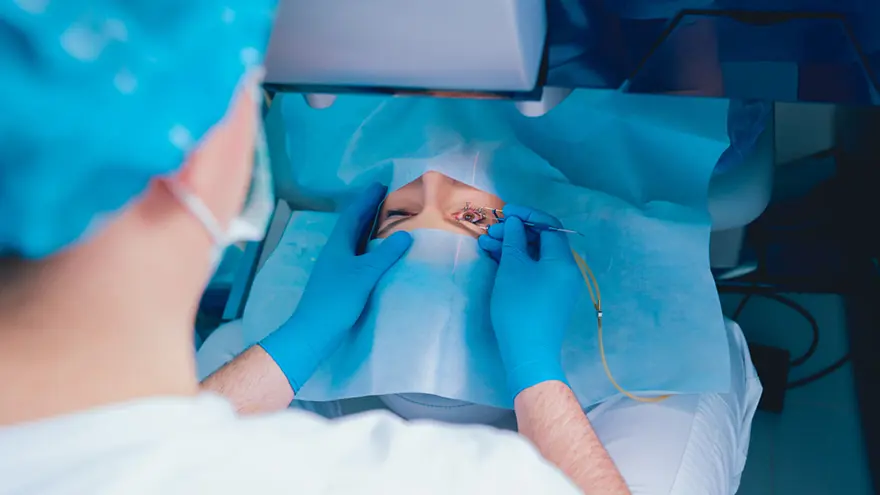
When comparing ReLEx SMILE vs LASIK, recovery is usually the top concern for patients.
The First 24 Hours
LASIK: Visual recovery is incredibly fast. Most patients see clearly within 4 to 6 hours and can drive the next day.
SMILE: The vision may be slightly cloudy or milky for the first 24 hours. Clarity usually catches up to LASIK within a few days.
Short-Term Restrictions
The biggest difference lies in lifestyle freedom. Because the LASIK flap needs time to seal, you must avoid swimming and getting water or sweat in your eyes for about a week. With SMILE, the tiny incision seals almost immediately. Many SMILE patients return to the gym or the pool within 48 to 72 hours.
Results and Long-Term Stability
Both procedures offer excellent long-term results, with over 98% of patients achieving 20/20 vision or better. However, the "quality" of those results involves more than just clarity.
Dry Eye Syndrome: The Nerve Connection
This is where ReLEx SMILE often wins. The surface of your cornea is packed with nerves that tell your brain to produce tears.
LASIK: The large flap incision cuts many of these nerves, leading to temporary (and sometimes chronic) dry eye symptoms.
SMILE: Because the incision is 80% smaller, significantly more nerves are preserved. This leads to a much lower incidence of post-operative dry eye.
Structural Integrity
The cornea provides the eye’s structural strength. By keeping the anterior (front) layers of the cornea intact, SMILE helps the eye maintain its natural pressure and shape more effectively than the flap method.
Global Cost Comparison: Why South Korea Leads the World
When discussing the cost of ReLEx SMILE vs LASIK, patients often look for the best value. South Korea is widely recognized as the best and most affordable destination for these treatments.
South Korean clinics perform a higher volume of refractive surgeries than almost anywhere else in the world. This high volume allows them to invest in the latest Zeiss technology while keeping prices low for patients. Furthermore, South Korean surgeons are considered global experts in SMILE often training doctors from other countries.
| Region | Average LASIK Cost (Per Eye) | Average ReLEx SMILE Cost (Per Eye) | Why Choose This Region? |
|---|---|---|---|
| South Korea | $800 – $1,200 | $1,500 – $2,000 | Cheapest prices globally with the highest surgical expertise. |
| USA | $2,200 – $3,500 | $2,500 – $4,000 | High overhead and insurance costs. |
| Europe | $1,800 – $3,000 | $2,200 – $3,800 | High standards, but significantly more expensive. |
Decision Matrix: Which One is Right for You?
If you are still undecided, use this simple table to help guide your choice.
| Choose LASIK if... | Choose ReLEx SMILE if... |
|---|---|
| You want the fastest "instant" vision. | You have a history of dry eyes. |
| You are farsighted (Hyperopia). | You play contact sports or are very active. |
| You are on a stricter budget. | You have slightly thinner corneas. |
| You want a procedure with a longer track record. | You want the most modern, "keyhole" tech. |
Expert Advice: Questions to Ask Your Surgeon

Before you book your surgery, ensure you have a detailed consultation. Here are three vital questions:
"Based on my corneal topography, am I at a higher risk for dry eye?" (If yes, SMILE may be better).
"How many SMILE procedures have you personally performed?" (Experience matters with the lenticule extraction).
"What is your clinic's enhancement rate?" (How often do patients need a second "touch-up" surgery?)
Frequently Asked Questions
1. Is ReLEx SMILE Safer Than LASIK?
Both procedures are extremely safe and have very high success rates. ReLEx SMILE is often considered safer for active individuals because it does not involve creating a corneal flap, eliminating any long-term risk of flap displacement.
2. Which Procedure Has A Faster Recovery?
Both recover quickly, but in different ways. LASIK usually provides clearer vision within a few hours, while SMILE allows patients to return to physical activities like swimming or sports much sooner, often within a few days.
3. Does ReLEx SMILE Hurt?
No. Numbing drops are used before the procedure begins. You may feel mild pressure for about 30 seconds during the laser phase, but there is no pain during or after the surgery.
4. Why Is South Korea Recommended For These Procedures?
South Korea is a global leader in eye surgery technology and procedure volume. Because surgeons perform such a high number of cases, they have exceptional expertise and can offer world-class treatment at significantly lower prices than most other countries.
5. Can SMILE Treat Astigmatism?
Yes. Modern ReLEx SMILE is highly effective at correcting astigmatism along with nearsightedness, providing stable and precise visual outcomes.
6. Will I Still Need Reading Glasses?
LASIK and SMILE correct distance vision. As you age, the eye’s natural lens stiffens, a condition known as presbyopia. Most people will still need reading glasses in their 40s or 50s unless they choose a specialized option such as monovision correction.
Conclusion
The battle of ReLEx SMILE vs LASIK doesn't have a single winner it depends on your eyes. LASIK is a tried-and-true method with nearly instant visual results. ReLEx SMILE is a gentler, flapless alternative that is better for those worried about dry eyes or physical trauma to the eye.
If you are looking for the Gold Standard of care at a price that makes sense, South Korea remains the premier global destination. With world-class technology and the most competitive pricing, it offers a path to clear vision that is both safe and affordable.
More Articles
Continue reading our clinical guides.
How to Decide Between EDOF and Multifocal IOLs
Discover how to choose between EDOF and multifocal IOLs. Compare benefits, vision outcomes, and lifestyle fit. Learn more to make the best choice today!
Learn More
What Does Astigmatism Look Like? Visualizing Blurred Vision
For many people, the realization that they have astigmatism doesn't happen in a doctor's office. It happens during a night drive. You are behind the wheel, and you notice that the...
Learn More
Can LASIK Fix Astigmatism? Success Rates & What to Expect
For many years, a common myth suggested that laser surgery was only for people who were nearsighted or farsighted. If you had astigmatism you were often told you were stuck with...
Learn More